
Social Skills Therapy Groups for Kids in Upland, CA
At King Speech Therapy Services, our social skills therapy groups for kids give children the tools they need to connect with peers, take turns in conversation, and build friendships that last. Serving families across Upland, Rancho Cucamonga, Ontario, Fontana, and the greater Inland Empire, our group sessions combine play-based learning with evidence-based strategies to help children grow as communicators and as people.
Why Group Therapy Works
Learning to Connect in a Real-World Setting
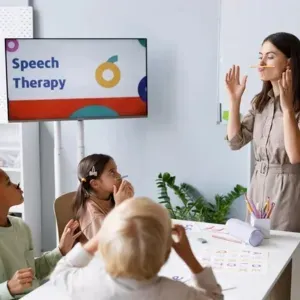
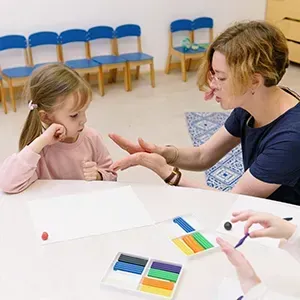
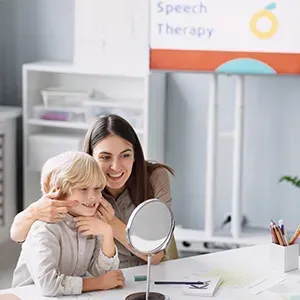
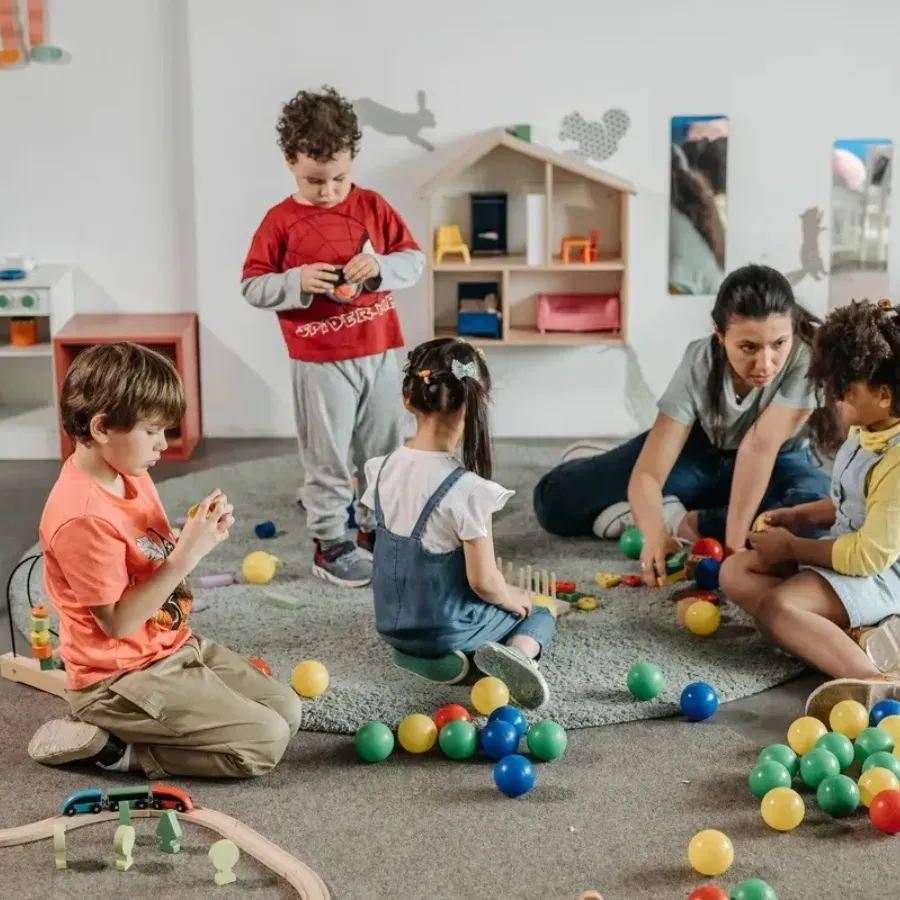
Individual therapy is a powerful starting point, but peer interaction therapy for children offers something that one-on-one sessions simply cannot: a real audience. When children practice turn-taking, joint attention, and conflict navigation with actual peers, the skills become more meaningful and more durable. Our speech therapy social groups provide a structured yet comfortable space where children can try hard things, make mistakes, and build the intrinsic confidence to try again. Each session is led by a licensed speech-language pathologist who guides the group through activities designed to mirror everyday social situations, from sharing toys to joining a conversation already in progress.

Who We Serve
Pediatric Social Skills Training for a Range of Needs
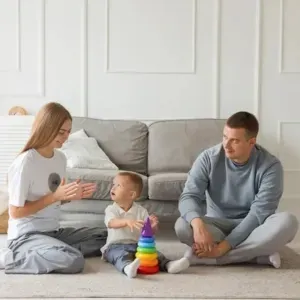
Our pediatric social skills training is appropriate for children aged 18 months through 17 years who are working on pragmatic language, peer engagement, play skills, and social-emotional learning. We work with children who have speech and language delays, children who are working toward autism social skills therapy goals, and children who simply need more practice reading social cues and responding in age-appropriate ways. Whether your child is a toddler learning to point and share, a preschooler figuring out how to join a game, or a school-aged child navigating the complexity of group friendships, our groups are structured to meet them where they are. Victoria King Erb, M.S., CCC-SLP, brings her coaching background to every session, creating an environment where each child is encouraged, not just observed.
What to Expect
How Our Social Groups Are Structured
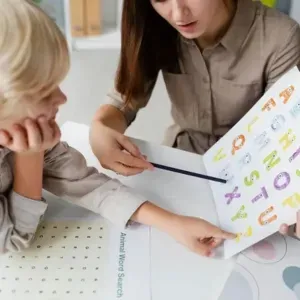
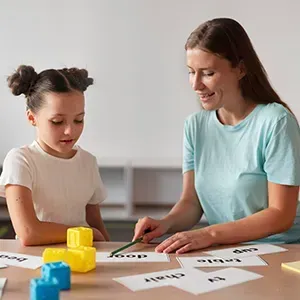
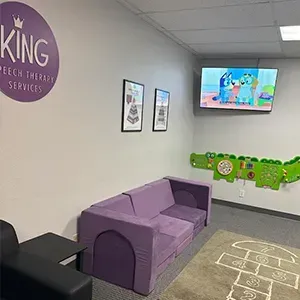
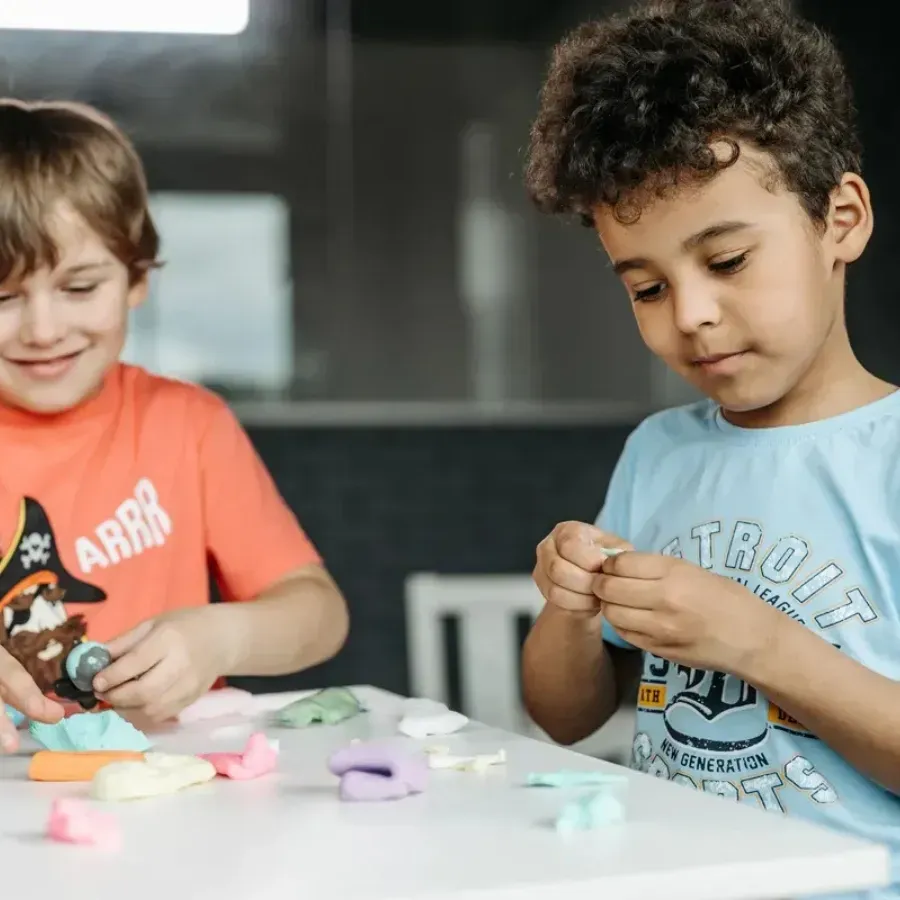
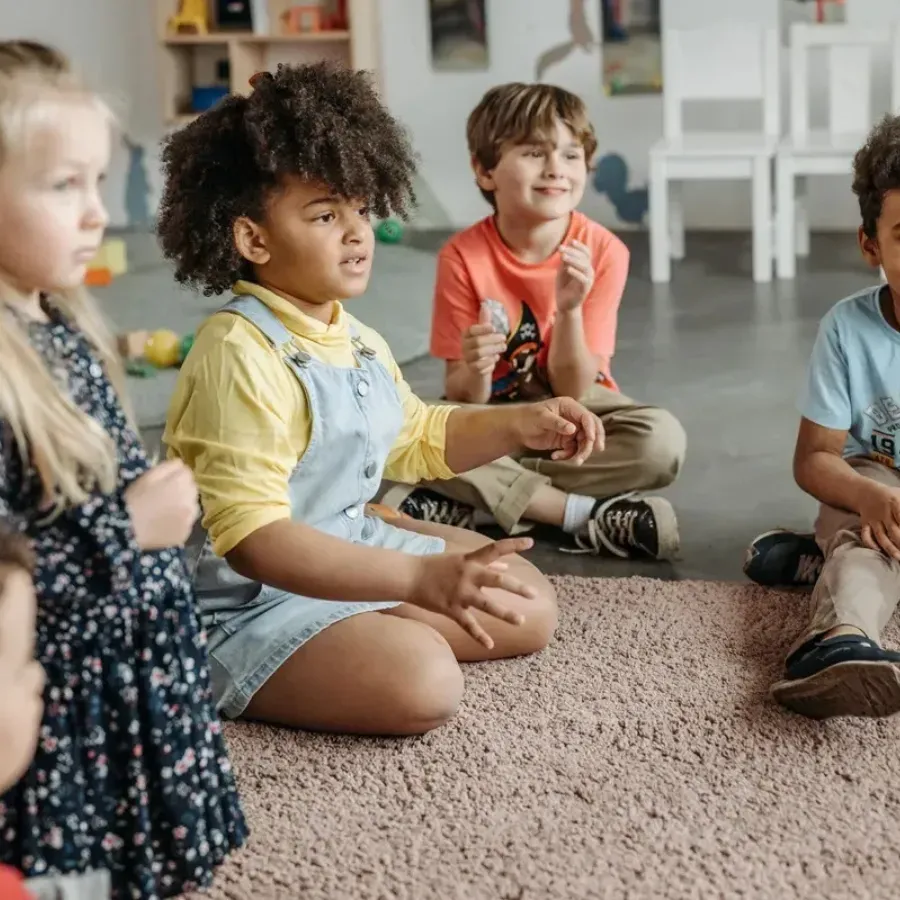
Every group session at our Upland clinic follows a consistent, predictable format so that children feel safe and ready to participate. Sessions typically include a warm-up activity to build comfort, a structured peer interaction task focused on a specific social goal, a play-based or sensory activity that reinforces the skill in a natural context, and a closing routine that gives each child a moment to reflect and celebrate effort. Parents receive a brief debrief after each session so they can carry the same strategies into daily life at home. This family-focused approach means the work does not stop when the session ends. It continues at the dinner table, on the playground, and during after-school activities throughout the week.
The King Speech Difference
A Coach-Led Approach to Communication and Connection
Victoria King Erb founded King Speech Therapy Services in May 2020 with a clear belief: communication is the foundation of a child's confidence and a family's quality of life. Her background in competitive softball shapes the way she runs every group. Children are coached, not just corrected. They are encouraged to take risks, handle setbacks, and build the social-emotional muscles they need to advocate for themselves. Our clinic in Upland, CA, is in-network with Cigna, Blue Shield, Anthem, HealthNet, and Aetna PPO plans. For families outside our network, we provide Superbills to support potential reimbursement. Teletherapy options are also available for families across the Inland Empire who cannot make it to our Upland location in person.
Common Questions
What Families Ask About Social Skills Groups
What age range is appropriate for social skills therapy groups at your Upland clinic?
Our social skills groups serve children from 18 months through 17 years old. Younger children in the toddler and preschool range typically focus on foundational skills like joint attention, turn-taking during play, and learning to point or gesture to communicate. School-aged children work on more complex goals such as joining an ongoing conversation, reading facial expressions, and navigating peer conflict. During an initial evaluation, our SLP will determine which group format and age cluster is the best fit for your child's current communication level and social-emotional goals.How is a speech therapy social group different from a playdate or social club?
A speech therapy social group is led by a licensed speech-language pathologist who has specific clinical goals in mind for each child. Unlike a casual playdate, every activity in the session is intentionally designed to target a measurable skill, such as initiating a topic, maintaining eye contact, or responding to a peer's question. Progress is tracked, strategies are adjusted based on each child's response, and parents receive guidance after every session so the same skills can be practiced at home. The group setting is structured to feel natural and fun while remaining clinically purposeful throughout.Does my child need an autism diagnosis to join a social skills group?
No. While autism social skills therapy is one area we address, our groups are open to any child who would benefit from support with pragmatic language and peer interaction. Children with speech and language delays, phonological disorders, or simply limited social communication experience are all welcome. What matters most is that your child is ready to participate in a small group setting and has goals that align with what the group is working on. A clinical evaluation helps us confirm that fit before your child joins any group program.How many children are typically in each group session?
Our groups are intentionally kept small to ensure each child receives meaningful attention and has enough opportunities to practice within each session. The exact size may vary depending on the age range and goals of the group, but the format is always structured to allow every child to participate actively rather than observe from the sidelines. Smaller groups also give our SLP more flexibility to coach in the moment and provide the kind of real-time feedback that helps children internalize new skills more quickly.How are parents kept informed about their child's progress in group therapy?
Parent involvement is a core part of how we work at King Speech Therapy Services. After each session, our SLP provides a debrief so you understand what was targeted, how your child responded, and what you can do at home to reinforce progress. This family-focused model is intentional. Because your child spends far more time with you than in therapy, giving you practical strategies to use during everyday routines, such as meals, chores, or outdoor play, significantly increases how quickly skills carry over into real life.What insurance plans does King Speech Therapy Services accept for group therapy?
We are in-network with PPO plans through Cigna, Blue Shield, Anthem, HealthNet, and Aetna. If your plan is out of network, we can provide a Superbill that you may submit to your insurance company for potential reimbursement. We also offer a prompt pay rate option for families paying out of pocket. We recommend contacting your insurance provider before your first appointment to confirm your specific benefits for speech-language pathology services, as coverage can vary depending on your individual plan details.How do I know if my child needs social skills support rather than just more time to mature?
It can be genuinely hard to tell the difference between a developmental lag and a communication need that would benefit from professional support. Some signs that a child may benefit from peer interaction therapy include consistent difficulty joining group play, frequent misreading of social cues, trouble maintaining a back-and-forth conversation, or behavioral outbursts that seem linked to frustration with communication. If you are noticing these patterns regularly and they are affecting your child's friendships or school experience, an evaluation with a licensed SLP is a good next step. Early support tends to produce faster and more lasting results.
REVIEWS