Language Therapy for Kids in Upland, CA
When a child struggles to understand what is being said or has trouble putting words together to express what they need, the whole family feels it. At King Speech Therapy Services in Upland, CA, we provide pediatric language development therapy that helps children from 18 months through 17 years build the communication skills they need to connect, learn, and grow. Whether your child is a late talker, has a language disorder, or needs support with social communication, we are here to work alongside you every step of the way.
What We Address
Receptive, Expressive, and Pragmatic Language Support
Language development covers a wide range of skills, and difficulties can show up in different ways. Some children struggle to understand directions or follow along in conversation. Others know what they want to say but cannot find the words or build sentences to say it. Still others have the words but need help using language in social situations with peers. Our speech and language therapy services in Upland address all three areas: receptive language (understanding and comprehending what is heard), expressive language (using gestures, words, or a communication device to share ideas), and pragmatic language (the social rules of communication, like turn-taking and staying on topic). We also work with children on emergent language skills, supporting the earliest building blocks of communication before formal words even arrive. No two children present the same way, and no two care plans look alike. We combine standardized testing, language samples, and parent interviews to build a picture of how your child communicates in real life, not just in a clinical setting.

Who We Help
From Late Talkers to School-Age Children with Language Disorders
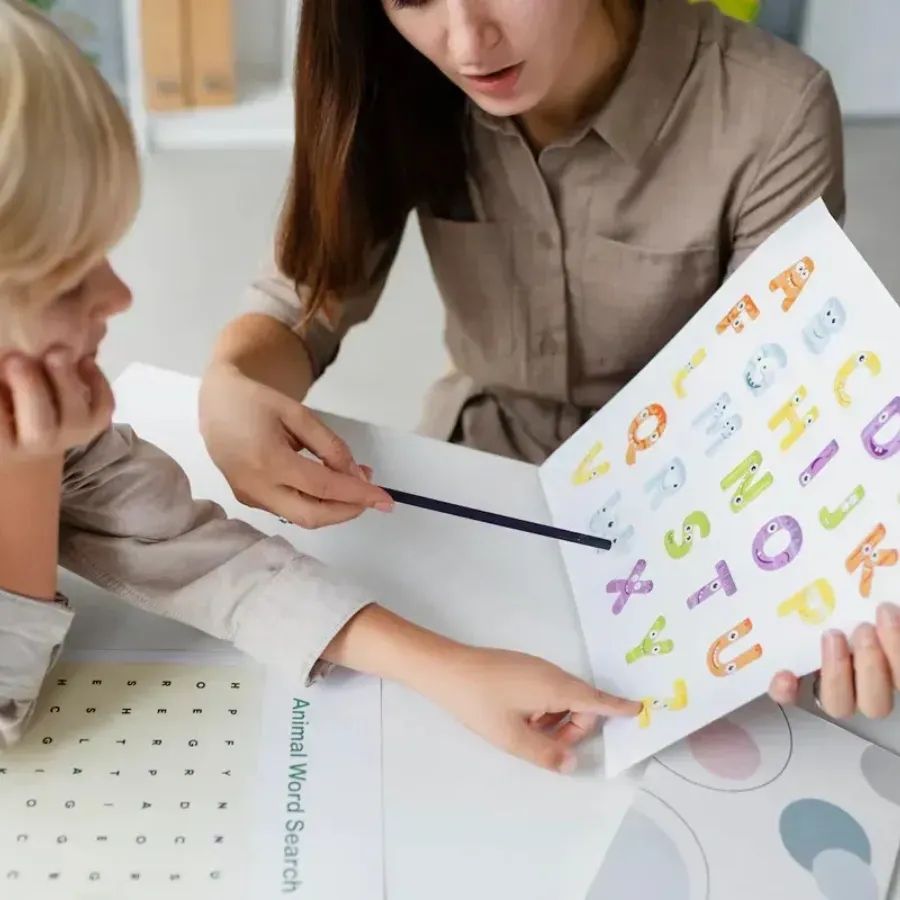
Language disorder treatment for children looks different at every age and stage. Our clinic works with families across the Inland Empire, including Upland, Rancho Cucamonga, Ontario, Fontana, Claremont, Victorville, and Apple Valley. For toddlers and preschoolers, we focus on early intervention and emergent language skills. If your 18-month-old has limited words or vocalizations, or your 2-year-old is difficult to understand, early support can make a meaningful difference. We use play-based, child-led approaches to meet children where they are, making sessions feel engaging rather than clinical. For school-age children, language challenges often show up in reading comprehension, following multi-step directions, and expressing ideas in writing or conversation. Expressive language therapy for kids in this age group targets vocabulary growth, grammar, and the ability to organize and share thoughts clearly. We also support families navigating the IEP process. If your child receives services through a school district, we can work alongside that team and help you understand your child's rights and goals.
Our Approach
A Family-Centered Model Built Around Real Life
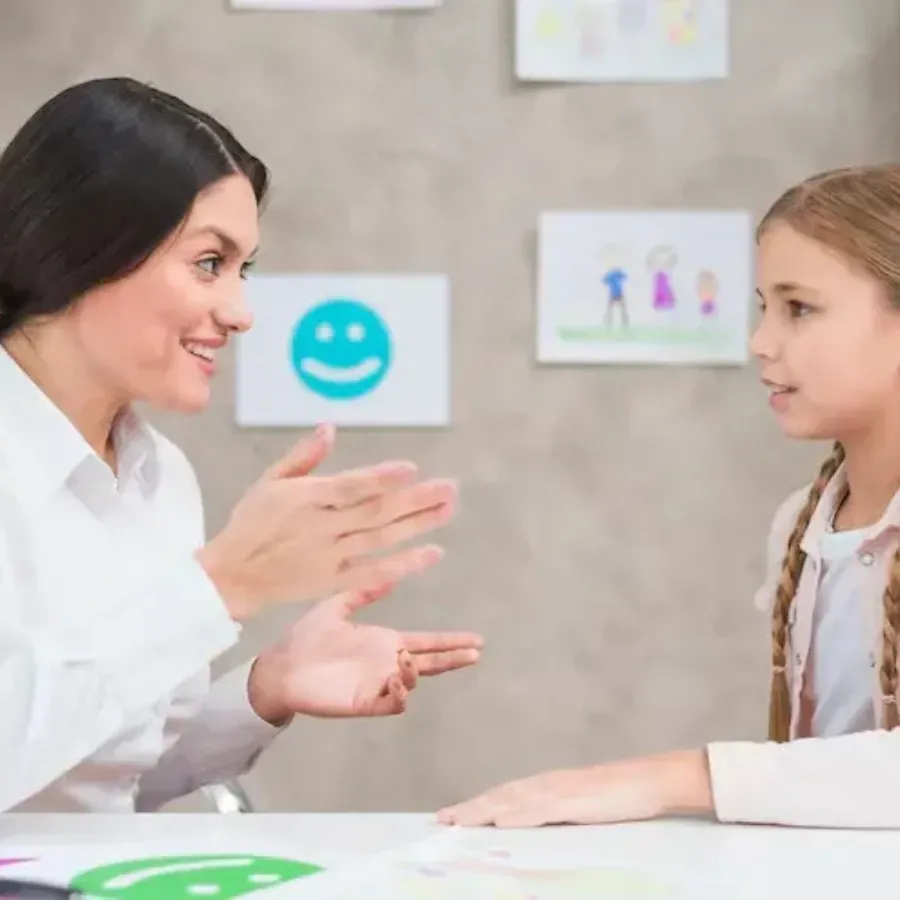
One hour of therapy each week is a starting point, not the whole picture. That is why our approach to pediatric language development therapy places parents and caregivers at the center of the process. After every session, we take time to debrief with you, sharing what we worked on and giving you practical strategies to carry into your day. Think about the moments you already share with your child: folding laundry, cooking dinner, reading a bedtime story, or playing at the park. These are rich opportunities to build vocabulary, model sentence structures, and practice the back-and-forth of conversation. We teach you how to use those moments intentionally, so progress does not stop when the session ends. Our lead clinician, Victoria King Erb, M.S., CCC-SLP, brings a coach-like philosophy to every case. She believes children grow when they are encouraged to try hard things, and that confidence in communication starts with feeling safe enough to make mistakes. That same spirit extends to parents: you do not need to have all the answers. We build this together.

Why King Speech Therapy Services
Clinical Depth with a Warm, Coaching-Driven Touch
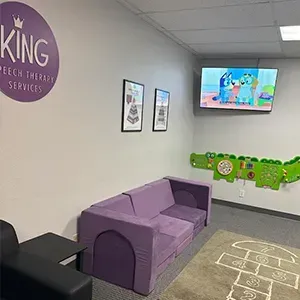
King Speech Therapy Services was founded in May 2020 and has grown into a dedicated clinic in Upland, CA. Our team holds specialized certifications including the Hanen It Takes Two to Talk program, which is specifically designed for children between 12 months and 4 years with language delays. We are also members of the Apraxia Kids SLP Directory and hold training in evidence-based methodologies that reflect the most current standards in pediatric care. We are in-network with several PPO plans, including Cigna, Blue Shield, Anthem, HealthNet, and Aetna. For families whose plans are out of network, we provide Superbills and a prompt pay rate option to help make services accessible. Families from across the Inland Empire trust us because we treat language therapy as a partnership, not a prescription. Your child's goals are shaped by what matters most to your family, and your voice is part of the plan from the very first evaluation.
Your Questions, Answered
Common Questions About Language Therapy for Kids
How do I know if my child needs language therapy rather than just more time to develop?
Pay attention to whether your child is meeting general milestones for their age. If your toddler has limited words or vocalizations, is difficult to understand by familiar adults, or seems frustrated when trying to communicate, those are signs worth discussing with a speech-language pathologist. Waiting can sometimes delay support that would make a real difference early on. A formal evaluation using standardized testing, language samples, and a parent interview can give you a clear picture of where your child stands and whether therapy is the right next step.What is the difference between receptive and expressive language, and why does it matter for treatment?
Receptive language is your child's ability to understand what is being said, following directions, processing questions, and making sense of conversation. Expressive language is how your child communicates outward, whether through words, gestures, signs, or a communication device. A child can have difficulty in one area without the other, or in both at the same time. Identifying which area is affected helps target therapy more precisely. A child who understands everything but cannot find the words needs a different approach than one who speaks freely but misses the meaning of what others say.At what age can a child begin receiving language therapy services?
We work with children as young as 18 months old through age 17. For families with children starting at 12 months, our Talk, Play, and Grow caregiver classes offer a structured, play-based environment to support early language development alongside a parent or caregiver. Early intervention is one of the most effective tools available for children with language delays, so we encourage families not to wait if they have concerns. The sooner we can assess where a child is, the sooner we can put a meaningful plan in place.What does a typical language therapy session look like for a young child?
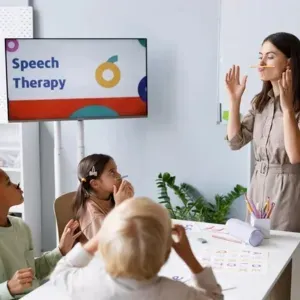
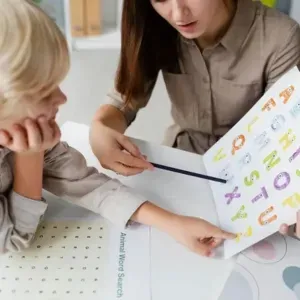
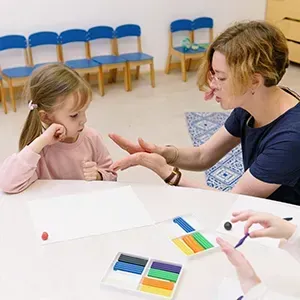
Sessions are play-based and child-led, meaning we follow your child's interests to keep them engaged and motivated. A clinician might use books, toys, or everyday objects to target specific vocabulary, sentence structures, or turn-taking skills. Rather than drilling flashcards at a table, we create natural opportunities for language to happen, then model, expand, and reinforce what your child produces. At the end of each session, we share what we worked on with you and give you strategies to practice at home, because progress happens across all the hours of the week, not just the one hour in clinic.Does King Speech Therapy Services accept insurance for language therapy?
Yes. We are in-network with several PPO plans, including Cigna, Blue Shield, Anthem, HealthNet, and Aetna. If your plan is out of network, we can provide a Superbill that you can submit to your insurance company for potential reimbursement. We also offer a prompt pay rate option for families paying out of pocket. We recommend contacting your insurance provider ahead of your first visit to understand your specific benefits and any coverage limits that may apply to speech and language therapy services.How involved can parents be in their child's language therapy sessions?
Very involved, and we strongly encourage it. Our model is built around the idea that parents are the most important people in a child's communication environment. We set aside time after every session to debrief with caregivers, explain what strategies were used, and show you how to carry those same techniques into daily routines like meals, bath time, and play. For families of children between 12 months and 4 years, we also offer the Hanen It Takes Two to Talk program, which is specifically designed to coach parents as the primary facilitators of their child's language growth.Is teletherapy available, or are all sessions held in person at the clinic?
We offer both clinic-based services at our Upland, CA location and teletherapy options. Teletherapy can be a practical fit for families across the Inland Empire who face transportation challenges or live farther from Upland, including families in areas like Victorville or Apple Valley. The right format depends on your child's age, needs, and what will support the best outcomes. This is something we can discuss during your initial consultation to figure out what works best for your family.
REVIEWS