
Orofacial Myofunctional Therapy for Children in Upland, CA
When a child breathes through their mouth, rests their tongue in the wrong position, or struggles with habits like thumb sucking, the effects can ripple into their speech, dental health, and sleep quality. Orofacial myofunctional therapy for children addresses these patterns at the source, helping kids build correct tongue and facial rest postures so their bodies can work the way they are meant to. At King Speech Therapy Services in Upland, CA, we work with families across the Inland Empire to identify myofunctional disorders early and guide children through evidence-based treatment that supports long-term communication and health.
What Is It?
Understanding Myofunctional Disorders in Kids
Orofacial myofunctional disorders (OMDs) are patterns involving the muscles of the face, mouth, and throat that interfere with normal breathing, chewing, swallowing, and speech. In children, these patterns often show up as tongue thrust, open mouth posture, mouth breathing instead of nasal breathing, or persistent habits like thumb sucking. Left unaddressed, they can affect dental alignment, articulation clarity, and even sleep quality over time. Myofunctional disorder treatment focuses on retraining the muscles and movement patterns involved so children can develop correct oral rest postures and healthier function. Victoria King Erb, M.S., CCC-SLP, holds specialized training in orofacial myology for pediatric patients, giving families in Upland, Rancho Cucamonga, Ontario, and surrounding areas access to a level of care that can be difficult to find in the Inland Empire.

Signs to Watch For
Common Indicators of a Myofunctional Disorder
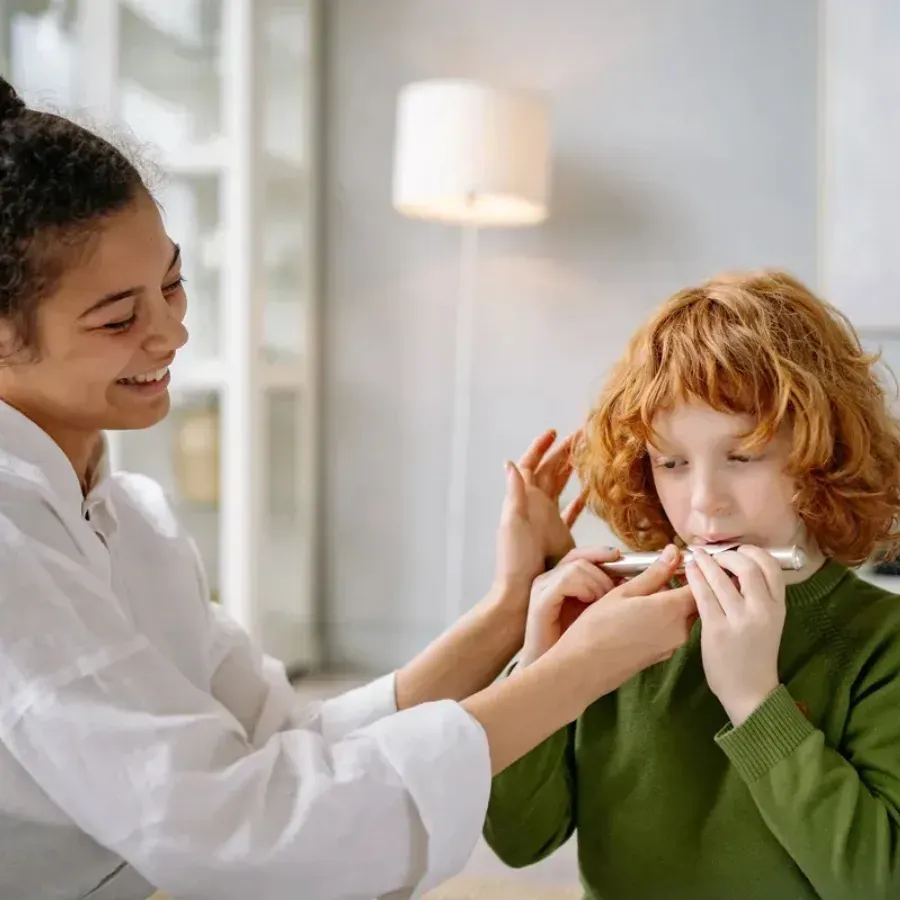
Many parents notice something feels off but are not sure what to call it. A child who consistently breathes with their mouth open, whose tongue rests between or against their front teeth, or who has trouble chewing age-appropriate foods may be showing signs of a myofunctional disorder. Other indicators include a persistent tongue thrust during swallowing, difficulty eliminating habits like thumb sucking, and speech sound errors that do not resolve with standard articulation practice. Referrals for oral motor therapy often come from pediatricians, dentists, orthodontists, and ENTs who notice these patterns during routine care. If any of these signs are familiar, an evaluation at our Upland clinic is a practical next step toward understanding what is going on and what can be done about it.
How We Help
What Tongue Thrust Therapy and Oral Motor Treatment Look Like
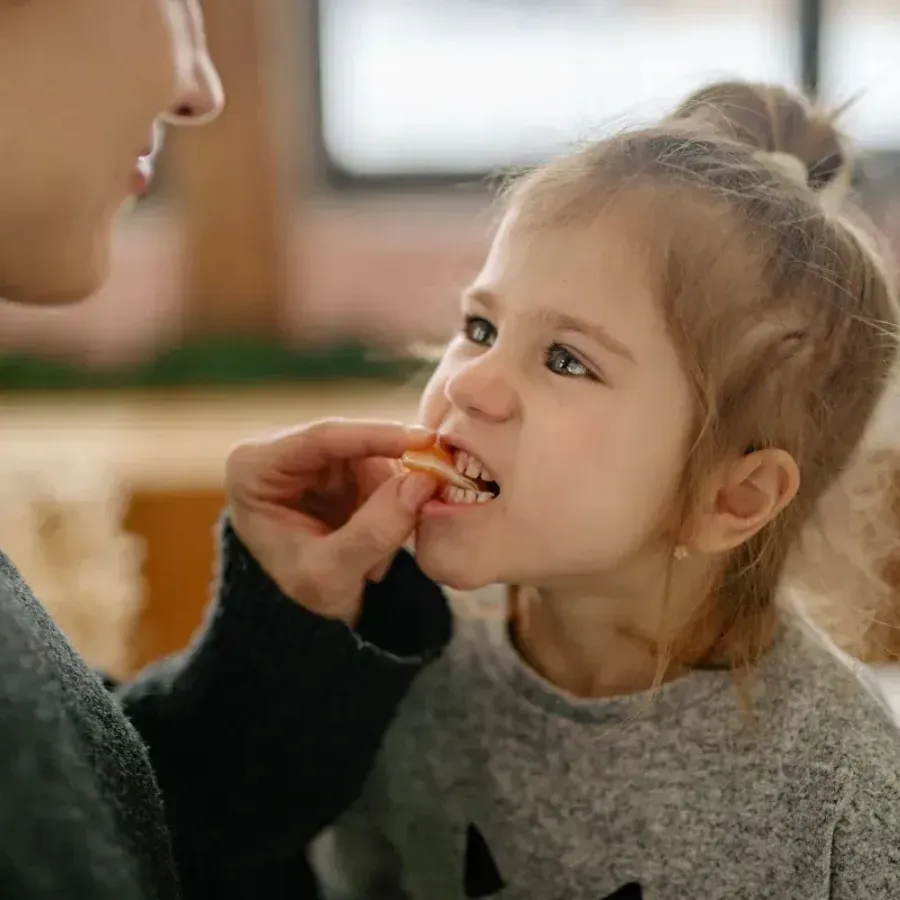
Treatment at King Speech Therapy Services begins with a thorough evaluation that combines standardized assessments, direct observation, and a detailed parent interview. This gives us a complete picture of your child's oral rest postures, breathing patterns, swallowing mechanics, and any habits affecting their development. From there, we build a care plan grounded in evidence-based practices and shaped around your family's daily routines. Tongue thrust therapy for kids at our clinic targets the specific muscle patterns driving the problem, using structured exercises and real-life practice to build new habits. We also work on nasal breathing, habit elimination, and correct chewing and swallowing mechanics. Because progress happens at home as much as it does in the clinic, we make parent coaching a core part of every session, giving caregivers the tools to reinforce strategies during meals, chores, and everyday activities.

Why It Matters
The Long-Term Impact of Treating Myofunctional Patterns Early
Addressing orofacial myofunctional patterns during childhood, before dental and skeletal structures are fully set, offers significant advantages. Correct tongue rest posture supports proper jaw development and reduces pressure on teeth, which is why orthodontists and dentists frequently recommend myofunctional therapy as part of a broader treatment plan. Nasal breathing supports better sleep, improved oxygenation, and healthier airway development. For children whose speech sound errors are linked to tongue placement or oral motor weakness, myofunctional treatment often works hand in hand with articulation therapy to produce clearer, more consistent results. At King Speech Therapy Services, we also coordinate with referring providers including ENTs, dentists, and orthodontists to make sure care is connected and consistent. Families across Fontana, Claremont, Apple Valley, and Victorville trust our clinic to bring this level of specialized, collaborative care to the Inland Empire.
Your Questions, Answered
Frequently Asked Questions About Myofunctional Therapy
At what age can a child start orofacial myofunctional therapy?
King Speech Therapy Services provides therapy for children from 18 months through 17 years of age. For myofunctional concerns specifically, the right time to begin depends on the nature and severity of the pattern, the child's ability to follow instructions, and input from referring providers like a dentist or orthodontist. An evaluation at our Upland clinic helps determine whether your child is ready for direct treatment or whether monitoring and parent education is the best starting point.How is tongue thrust different from a typical swallowing pattern?
During a typical swallow, the tongue presses against the roof of the mouth, not against or between the teeth. Tongue thrust refers to a pattern where the tongue pushes forward against the teeth during swallowing, speaking, or at rest. Over time, this forward pressure can affect dental alignment and contribute to speech sound errors, particularly with sounds like 's,' 'z,' 'sh,' and 'th.' A myofunctional evaluation can determine whether your child's swallowing pattern is contributing to these concerns and what treatment would look like.Can mouth breathing really affect my child's speech and development?
Yes. Consistent mouth breathing, rather than nasal breathing, affects the resting position of the tongue, the development of the jaw and palate, sleep quality, and in some cases articulation clarity. When a child breathes through their mouth habitually, the tongue tends to rest low in the mouth rather than against the palate, which can interfere with correct sound production and oral muscle development. Myofunctional therapy works to address the underlying muscle patterns that contribute to open mouth posture and supports a transition to healthier nasal breathing habits.Will my child need to see a dentist or orthodontist alongside myofunctional therapy?
In many cases, yes. Orofacial myofunctional disorders often intersect with dental and orthodontic concerns, and Victoria King Erb coordinates care with referring providers including dentists, orthodontists, and ENTs when appropriate. Addressing the muscle patterns through therapy while dental or orthodontic treatment is underway tends to produce more stable, lasting results. We welcome collaborative care and can communicate with your child's other providers to make sure everyone is working from the same plan.Can therapy help a child stop thumb sucking or other oral habits?
Yes. Persistent oral habits like thumb sucking or pacifier use beyond typical developmental windows can affect tongue rest posture, dental alignment, and jaw development. At King Speech Therapy Services, habit elimination is one of the specific areas addressed within myofunctional treatment. Therapy focuses on building awareness, replacing the habit with healthier oral rest patterns, and giving caregivers practical strategies to support the process at home. The approach is encouraging and structured, which helps children build the motivation to change the habit themselves.Does insurance cover orofacial myofunctional therapy?
King Speech Therapy Services is in-network with several PPO plans including Cigna, Blue Shield, Anthem, HealthNet, and Aetna. Coverage for myofunctional therapy specifically can vary by plan and diagnosis, so it is worth contacting your insurance provider to ask about your benefits before beginning treatment. For families whose plans are out of network, the clinic provides Superbills that you can submit to your insurance company for potential reimbursement, and a prompt pay rate option is also available.How long does myofunctional disorder treatment typically take?
Treatment length varies depending on the specific patterns being addressed, the child's age, how consistently strategies are practiced at home, and whether any related dental or medical treatment is happening at the same time. Because progress is built through repetition and daily habit formation, parent involvement between sessions plays a significant role in how quickly children advance. During the initial evaluation, Victoria will share her clinical impressions and give you a realistic sense of what to expect for your child's specific situation.Can myofunctional therapy help with my child's speech sound errors?
It can, particularly when those errors are linked to tongue placement or oral motor patterns. A child with a tongue thrust may produce certain sounds incorrectly because their tongue is habitually positioned against their teeth. In these cases, addressing the underlying myofunctional pattern supports more accurate sound production. When both speech sound errors and myofunctional concerns are present, Victoria may address both within a coordinated care plan, integrating articulation work with oral motor retraining for a more complete approach.
REVIEWS